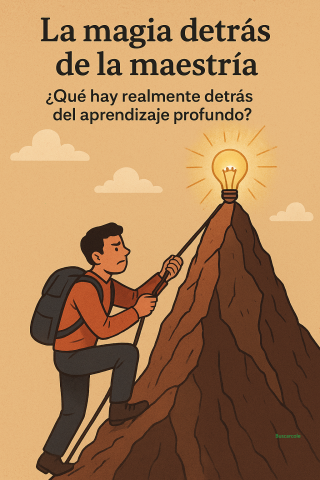
We have all heard the phrase “practice makes perfect.” But what does that really mean? We often think of learning as a path filled with fun and ease. We like to believe that we can master a new skill simply by enjoying the process, without effort or discomfort. However, research in education and human performance tells us something different.
As influential Swedish researcher and psychologist K. Anders Ericsson, pointed out, deliberate practice is not always enjoyable. It requires effort and often takes us out of our comfort zone. The main motivation for continuing to practice is not immediate enjoyment, but the fundamental belief that effort will make us better. It is the promise of improvement that drives us forward, even when the going gets tough.
|
K. Anders Ericsson |
|
«Deliberate practice requiere effort and is not inherently enjoyable. Individuals are motivated to practice because practice improves performance.» |
This means that maximum learning does not happen naturally. It is not something that happens just by making things more comfortable or convenient. In fact, sometimes, in order to truly learn, we have to be willing to make sacrifices: sacrificing comfort for challenge, immediate pleasure for long-term growth.
So, the next time you encounter a difficult concept or a skill that you struggle to master, remember that discomfort is a sign that you are on the right track. True learning is not a walk in the park; it is intentional training that, while not always fun, is the only way to achieve mastery.