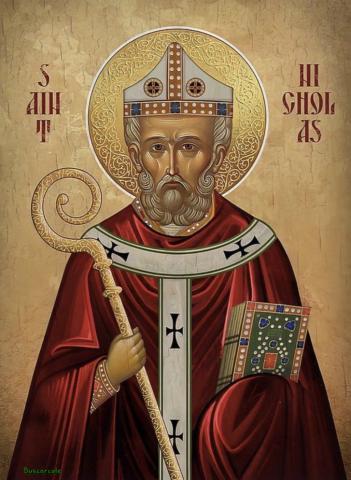
When we think of Saint Nicholas, we tend to imagine the generous character who, over time, gave rise to Santa Claus. However, his historical figure is much more interesting, especially for those of us who work in education. His life—full of acts of kindness, sensitivity, and the occasional moment of human weakness—offers valuable opportunities for reflection with children and teenagers.
A historical figure beyond the myth
Saint Nicholas was born in the third century in the region of Lycia (now Turkey). Orphaned at a young age, he used the fortune he inherited from his parents to discreetly help those most in need. Over time, he became bishop of Myra, and his reputation as a protector of children, vulnerable families, and sailors led him to become one of the most beloved figures of his time.
Over the centuries, stories of his acts of kindness spread throughout Europe, transforming culturally into what we now know as Santa Claus or Father Christmas.
The famous anecdote of the “slap” at the Council of Nicaea
Among the many stories surrounding his figure, there is one that often surprises: the tradition that tells how Saint Nicholas struck a participant in an important debate.
During the Council of Nicaea (325 AD), a meeting marked by tension and disagreement, Nicholas confronted a priest named Arius. Arius' ideas were highly controversial, and tradition has it that Nicholas lost his temper and slapped him.
Did it happen exactly like that? It's hard to know. Most likely, the story is a mixture of fact and legend, but it became a popular image of the saint in medieval art.
And how can this help us in education?
Precisely because it is such an unexpected scene, it is a wonderful opportunity to work on essential topics with children:
- Even kind people can get angry.
- Losing your temper is human, but you can always learn to manage it better.
- Disagreement does not have to be resolved with violence..
We can present it this way: “Even someone known for their generosity and kindness lost their temper one day. This reminds us that managing emotions is part of learning, and that we are all—children and adults alike—in the process.”
Turning this anecdote into an educational point helps normalize frustration and teach self-control strategies.
What the story of Saint Nicholas can teach us today
Beyond the legends, the life of Saint Nicholas conveys universal values that we can integrate into everyday education:
1. Authentic generosity
Saint Nicholas did not give gifts to attract attention; he did so to help. The greatest gift for a child is the presence and example of the adults around them.
2. Empathy as an educational foundation
He was especially concerned for those who were suffering. Before reacting, try to understand how the child feels.
3. Respect and discretion
His help was silent, without showing off. Protecting privacy and intimacy is an extremely important value in the digital age.
4. Tradition as a teaching tool
The stories of Saint Nicholas have been passed down for centuries. Traditions are opportunities to talk, connect with others, and pass on values.
In summary: an ancient character with a very modern message
Without focusing on religion, the figure of Saint Nicholas offers us a useful guide for discussing generosity, empathy, self-control, and community.
His story reminds us that educating is an act of generosity, that children need authentic role models, and that even the most admired figures have their imperfect moments... and we can learn from those too.